
Datadory
A catalog of 1,744 datasets with field dictionaries, sample rows, and coverage details, delivered through API, files, or a warehouse.
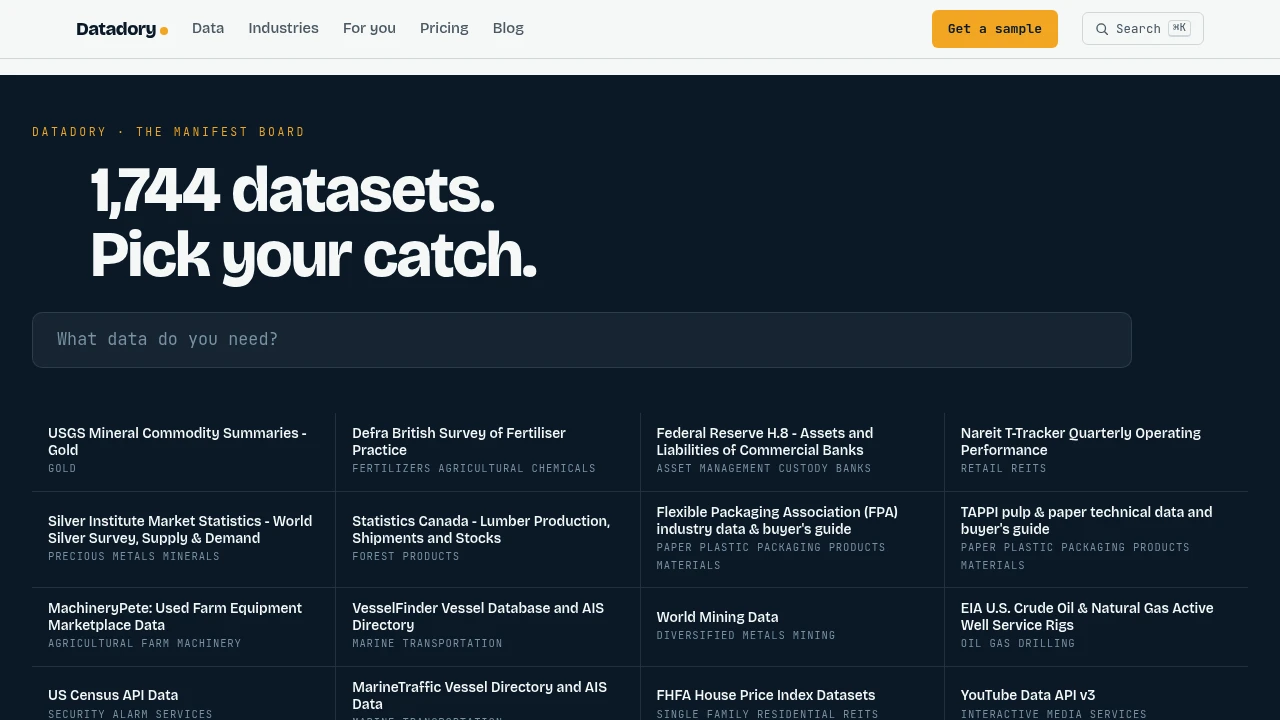
Datadory is a dataset catalog for teams that need real source data before committing to a dataset. It organizes 1,744 datasets across a wide range of industries and gives buyers, analysts, and product teams a way to evaluate data using actual samples, field definitions, and coverage details rather than relying only on a sales description.
The catalog is designed to make dataset selection more practical. Each listing exposes information about the structure and scope of the data, while delivery options and collection cadence help teams understand how the dataset could fit into an existing workflow.
Key Features
Dataset Catalog
Browse a large collection of structured datasets across multiple industries and use cases.
- 1,744 datasets
- Coverage across multiple industries
- Datasets organized by industry and job use case
- Broad historical datasets and narrower current datasets
- Designed for data buyers, analysts, and product teams
Field Dictionaries
Understand what each dataset actually contains before making a decision.
- Defined column names
- Field descriptions
- Example values
- Data structure information
- Easier schema evaluation
Sample Rows
Inspect real examples of the data before committing to a dataset.
- Sample records
- Visibility into data shape
- Concrete examples of available fields
- Helps evaluate dataset fit early
Coverage Details
Review the scope of a dataset before using it in a project.
- Geographic coverage
- Time range
- Data grain
- Record examples
- Validated coverage information
- Visibility into nulls and completeness
Flexible Data Delivery
Choose a delivery method that fits your existing data workflow.
- API delivery
- File-based delivery
- Warehouse delivery
- Structured datasets for downstream analysis
Collection Cadence
Select how frequently data should be delivered based on the use case.
- Daily delivery
- Weekly delivery
- Hourly delivery
Built For Data Discovery
Datadory is designed for teams that need external datasets and want enough information to evaluate them before requesting or purchasing access.
It is particularly suited to:
- Data buyers comparing external data sources
- Analysts evaluating datasets for research
- Product teams looking for data to power applications
- Operations teams needing structured external information
- Businesses comparing datasets across industries and use cases
Common Use Cases
Dataset Research
Browse datasets by industry or job use case when you need external data for a specific project.
Data Source Comparison
Compare datasets using field definitions, sample rows, coverage, and delivery options instead of relying solely on provider descriptions.
Product Development
Evaluate external datasets that could be incorporated into products, applications, or internal systems.
Analytics & Research
Find structured data with relevant historical coverage, geography, and grain for analysis.
External Data Procurement
Review the practical details of a dataset before committing to a data source or delivery workflow.
Explore Data Before You Commit
A key part of Datadory is the amount of information available before requesting a dataset. Instead of only showing a high-level description, listings expose sample rows, field meanings, and coverage details so teams can assess whether the data actually matches their requirements.
The catalog also surfaces validated coverage and honest nulls, giving users more context around completeness and the limitations of a dataset.
Built Around Real Source Data
Datadory focuses on making dataset discovery more concrete. The combination of field dictionaries, sample rows, coverage information, and delivery options gives teams a clearer picture of what they are evaluating before they commit.
That makes it useful when schema, history, geographic scope, and delivery format matter as much as the dataset's overall topic.
Find the Right Dataset With Datadory
Browse structured external datasets, inspect real sample rows and field definitions, compare coverage, and choose data based on what the source actually contains.


