
How do we say
Translate one word into 30 languages at once and check domain availability for naming startups, brands, or projects.
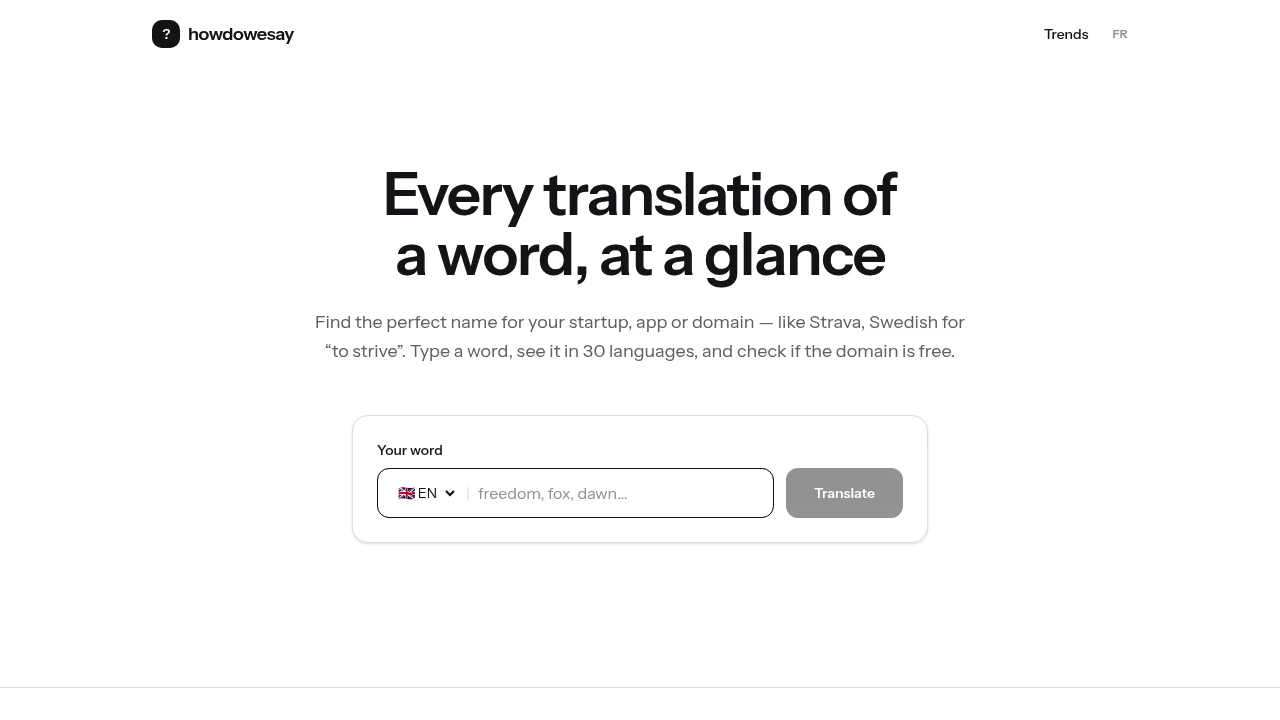
How do we say is a naming tool for founders, brand builders, and project creators who want to find a usable name by looking beyond how a word sounds. You enter a word and see its translations across 30 languages, then check whether the corresponding domain is available.
The workflow combines language exploration with a practical domain check. Instead of researching translations one language at a time, you can compare multiple versions of the same word on one screen and quickly identify options that feel short, memorable, or distinctive enough to become a brand.
Key Features
30-Language Comparison
Explore a word across multiple languages at once.
The tool translates an entered word into 30 languages, making it easier to discover alternative versions that could work as a startup, product, or project name.
This gives founders a broader naming pool without requiring them to research each language separately.
Domain Availability Check
Check whether a potential name can also work as a domain.
After exploring translations, the domain availability check adds an immediate practical filter. This helps users identify naming ideas that are not only interesting linguistically but also potentially usable online.
Naming-Focused Workflow
Explore names through translations rather than generic name generation.
The tool is built around finding variations of an existing word, which makes it useful when you already have a concept or keyword and want to explore how it could become a distinctive brand name.
Simple Input Flow
Start with a single word and explore the possibilities.
The workflow keeps the process lightweight:
- Enter a word
- Compare translations
- Identify interesting variations
- Check domain availability
This makes it useful for quickly testing multiple naming directions without working through a large generator interface.
Built for Multilingual Name Discovery
The tool combines translation research and domain availability into one naming workflow, helping users move from an initial word to a potentially usable brand name.
Key benefits include:
- Compare a word across 30 languages
- Discover alternative naming directions
- Look for short and memorable translations
- Explore international naming ideas
- Check domain availability
- Research startup names
- Explore brand names
- Find names for apps and side projects
- Avoid checking languages individually
- Filter naming ideas based on online availability
Built For
- Startup Founders
- Brand Builders
- Entrepreneurs
- Product Creators
- Indie Hackers
- App Developers
- Side Project Builders
- Marketing Teams
- Naming Consultants
Common Use Cases
- Finding a startup name
- Naming a new brand
- Exploring app names
- Naming side projects
- Finding international brand ideas
- Comparing translations for naming
- Discovering short naming variations
- Checking whether a potential name has an available domain
- Exploring names derived from foreign languages
- Finding distinctive alternatives to common English words
Why It Matters
A name can sound good but still be difficult to use as a real brand if it is too common, difficult to distinguish, or already claimed online. Checking translations and domain availability early can narrow the naming process before a founder commits to an idea.
This tool takes a language-first approach. Instead of generating a large list of unrelated suggestions, it starts with a word and shows how that concept appears across 30 languages. That can uncover shorter or more distinctive alternatives that may not appear in a conventional naming generator.
The domain check adds another practical layer. Once an interesting translation is found, users can immediately see whether the name has potential as an online identity. The site uses examples such as Strava to illustrate how words from another language can become the starting point for memorable brands.
Explore Multilingual Names and Check Domains
Enter a word, compare its translations across 30 languages, identify the versions that could work as a brand, and check domain availability to narrow the list to names that are both distinctive and practical.