
IdeaHunter
Find startup, app, and micro-SaaS ideas scoped for solo founders with buyer pain, monetization hypotheses, and demand signals.
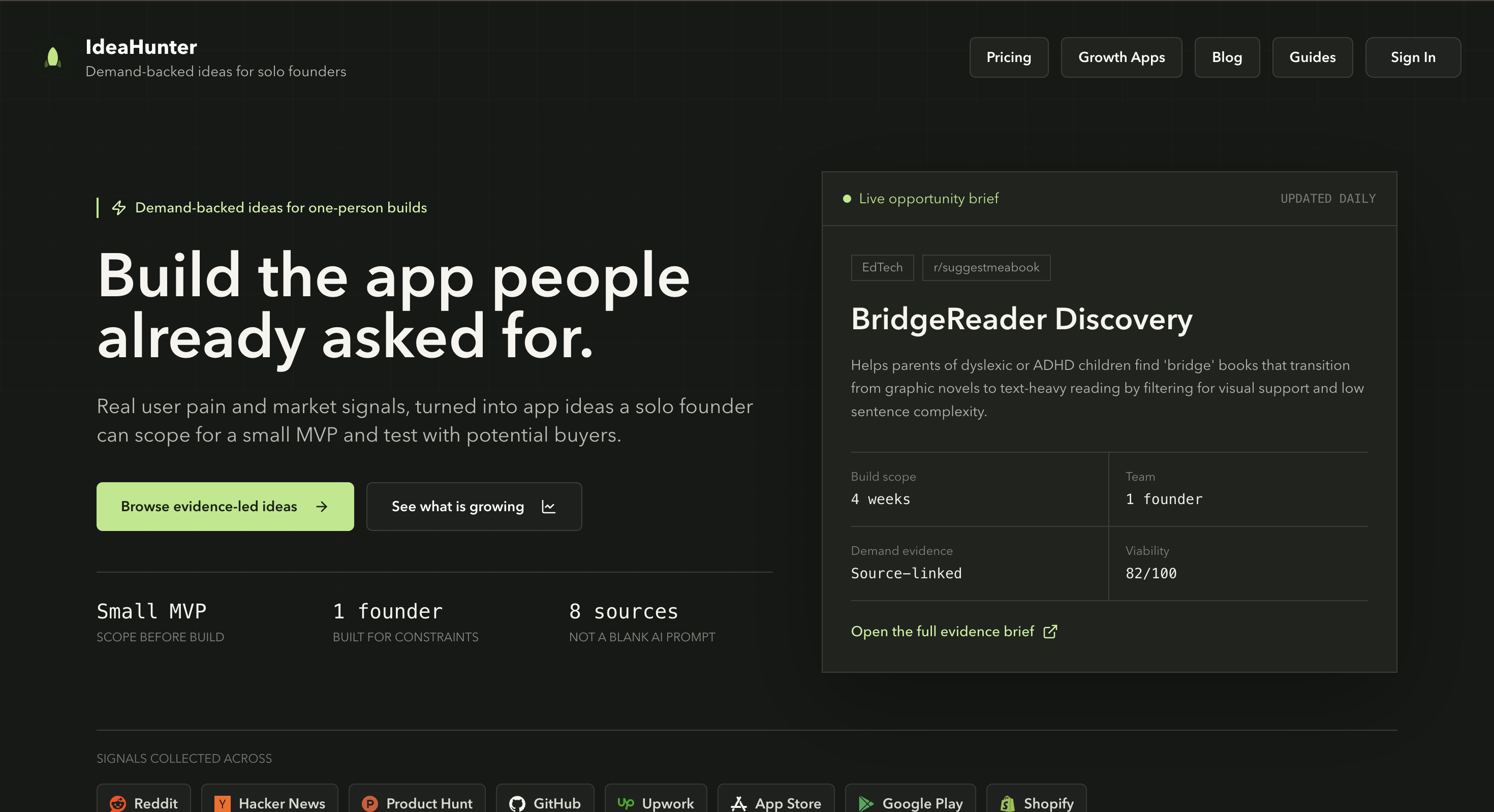
IdeaHunter is an AI-assisted platform for finding product, startup, and everyday-use opportunities from community, buyer, and software signals. It’s aimed at solo founders who want to evaluate ideas before writing code and prefer evidence-backed opportunities over generic idea lists. The platform connects each opportunity to the signals behind it, helping founders understand why an idea may be worth exploring.
Key Features
Source-Linked Research
Connect each idea to the evidence behind it.
IdeaHunter links opportunities back to the source material that supports them, making it easier to investigate where an idea came from and judge the strength of the underlying signal.
Buyer Pain Analysis
Identify the problem behind each opportunity.
The platform highlights the buyer pain an idea is intended to solve, helping founders understand whether the opportunity is connected to a meaningful problem rather than being based only on an interesting concept.
Monetization Hypotheses
Explore how an idea could potentially make money.
IdeaHunter provides starting points for monetization, giving founders a way to think about the commercial side of an opportunity before committing to development.
Demand Signals
Look for evidence of existing market interest.
The platform surfaces signals suggesting that people may already be experiencing or discussing the problem, helping founders distinguish potential demand from purely speculative ideas.
Solo-Founder Scope
Focus on ideas that can fit a smaller build effort.
Opportunities are framed with solo founders in mind, making the platform useful for people looking for products, apps, and micro-SaaS ideas that can be explored without a large development team.
Built for Evidence-Based Idea Discovery
IdeaHunter combines community signals, buyer pain, software signals, and monetization thinking into a research workflow designed to help founders evaluate opportunities before building.
Key benefits include:
- Discover product opportunities
- Find startup and micro-SaaS ideas
- Explore everyday-use product opportunities
- Connect ideas to source material
- Identify buyer pain behind opportunities
- Review potential demand signals
- Explore monetization hypotheses
- Compare opportunities before development
- Focus on ideas suitable for solo founders
- Research opportunities using real-world signals
Built For
- Solo Founders
- Startup Founders
- Indie Hackers
- Micro-SaaS Builders
- Product Developers
- Entrepreneurs
- Startup Teams
- App Builders
Common Use Cases
- Finding startup ideas
- Discovering micro-SaaS opportunities
- Validating product ideas before coding
- Researching buyer problems
- Comparing potential business ideas
- Finding evidence of market demand
- Exploring monetization options
- Identifying problems discussed by communities
- Evaluating ideas for solo-founder feasibility
- Researching opportunities before investing development time
Why It Matters
Coming up with product ideas is easy. The harder part is deciding whether an idea is worth spending time building.
IdeaHunter focuses on that evaluation step by connecting opportunities to the signals behind them. Instead of presenting a list of concepts without context, it frames each opportunity around buyer pain, potential demand, source material, and possible monetization.
That makes it useful for founders who want to filter ideas before writing code. By looking at the evidence behind an opportunity, you can spend more time investigating ideas that show signs of real demand and less time building based purely on intuition.
Find and Evaluate Product Opportunities
Use IdeaHunter to discover opportunities from community, buyer, and software signals, investigate the sources behind them, understand the problem being addressed, and assess potential demand and monetization before committing to development.