
RequestGuard
Monitors public website security settings, flags changes, and adds suspicious-email and lookup tools in one place.
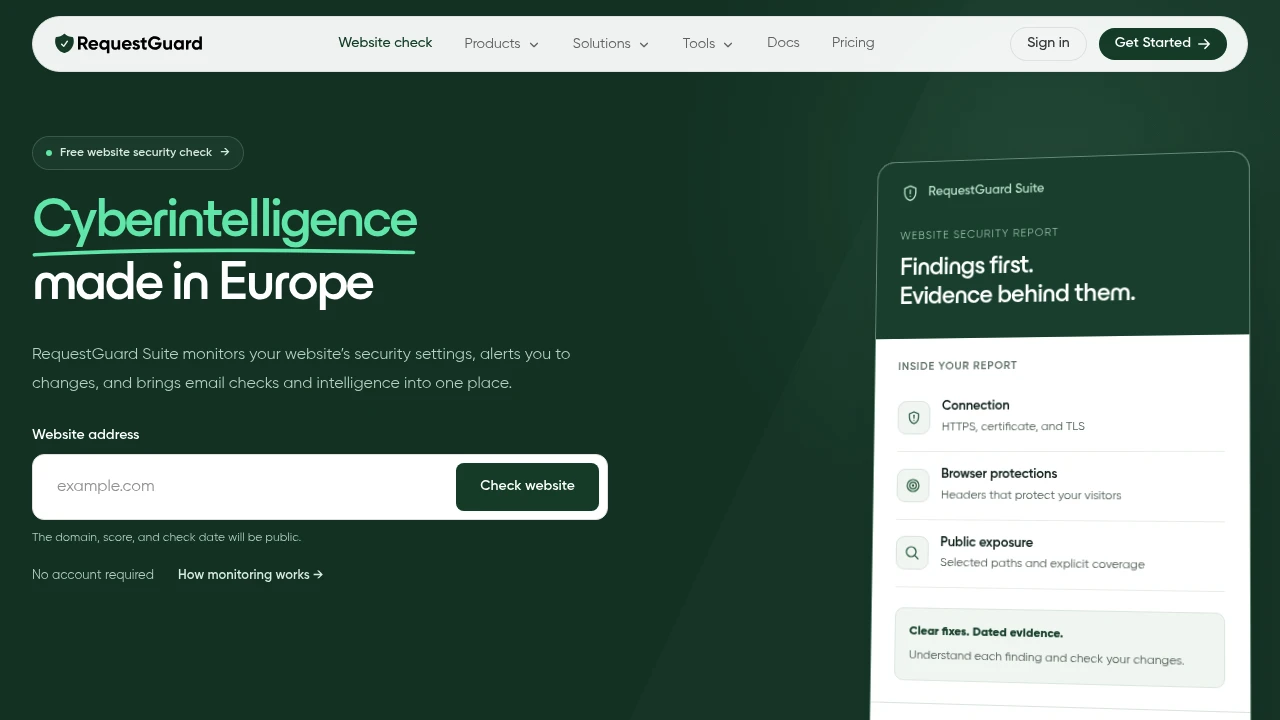
RequestGuard Suite helps teams monitor public website security settings, investigate suspicious emails, and perform security-related lookups without needing a full security platform. It is designed for site owners, agencies, and people responsible for checking website exposure who want clear, dated evidence they can review, compare, and share.
The platform combines website security reports, change monitoring, suspicious-email analysis, and lookup tools in one workspace. Reports focus on observed public settings and selected threats, giving users practical findings they can investigate and act on without presenting the results as an absolute security certification.
Key Features
Website Security Reports
Check publicly observable security settings for a website.
Reports cover areas such as:
- Connection details
- Browser protection headers
- Selected public paths
- Observed security settings
- Selected public threats
The results are designed to show what was actually observed so site owners and agencies can review potential exposure and decide what needs attention.
Change Alerts
Track confirmed changes to monitored websites over time.
RequestGuard Suite can send alerts for:
- Confirmed changes
- Monitoring failures
- Recovery events
Alerts include dated evidence, making it easier to determine what changed and when rather than relying on an undated status indicator.
Shareable Security Evidence
Reports put the findings first while keeping supporting details available behind them.
This makes the results easier to discuss with non-technical customers and useful for agencies preparing security-related reports for clients.
An optional verified profile and badge can also be included where applicable.
Suspicious Email Checks
Submit a suspicious message for analysis and review the information associated with it.
Email checks can examine:
- Sender details
- Links
- Eligible attachments
This gives users a practical way to investigate potentially suspicious messages without requiring a complete email security platform.
Security Lookups And API
Investigate security-related information through the dashboard or application integrations.
The lookup functionality supports:
- IP addresses
- Domains
- Email addresses
An API is also available for teams that want to incorporate lookup information into their own applications or workflows.
Domain, Email And Traffic Intelligence
RequestGuard Suite includes intelligence across several areas relevant to public exposure and investigation.
This includes:
- Domain popularity
- Disposable email signals
- Threat-heavy email signals
- Bot intelligence
- Attack ASN intelligence
These signals can provide additional context when reviewing a domain, email address, or network-related finding.
No Account Required For Website Checks
A website security check can be performed without creating an account.
This makes it useful for quick assessments, one-off checks, and initial investigations where setting up an account would add unnecessary friction.
The broader lookup catalog is also available through the suite for users who need more extensive investigation capabilities.
Built For Site Owners And Agencies
Website Owners
Monitor public-facing security settings and identify changes that may require attention.
Agencies
Monitor client websites, track changes, and prepare security reports that are easier to explain to non-technical customers.
Security-Conscious Teams
Keep an eye on publicly observable exposure without adopting a full security monitoring platform.
Investigators
Use domain, IP, and email lookups alongside suspicious-email analysis to gather additional context.
Common Use Cases
Monitoring Client Websites
Agencies can track public security settings across client sites and receive dated alerts when confirmed changes occur.
Reviewing Website Exposure
Run a website security report to examine publicly observable connection details, browser protection headers, and selected paths.
Investigating Suspicious Emails
Submit a suspicious message and examine its sender, links, and eligible attachments.
Tracking Security Changes
Compare checks over time and use dated evidence to understand what changed.
Investigating Domains And IPs
Use the lookup catalog and API to investigate domains, IP addresses, and email addresses.
Preparing Client Reports
Use evidence-first findings and supporting details to create reports that can be discussed with customers without requiring them to interpret raw technical data.
Practical Security Reporting
RequestGuard Suite is built around observed evidence rather than broad security claims.
Its reports describe public settings and selected threats that were actually observed during checks. This makes the output useful for monitoring and investigation while keeping the scope of what the report means clear.
The platform does not present a website check as a guarantee that a business is secure or that a site cannot be compromised.
Why It Matters
Website security checks can become difficult to communicate when the output is either too technical or too broad. Teams often need something more practical: what was observed, what changed, when it changed, and what deserves further investigation.
RequestGuard Suite brings those needs together through website monitoring, dated change alerts, evidence-backed reports, suspicious-email checks, and domain, IP, and email lookups.
For agencies in particular, the combination of monitoring and shareable evidence provides a way to discuss public website exposure with clients without turning a report into an absolute security certification.
Monitor, Investigate, And Document Public Exposure
Keep track of publicly observable website security settings, receive dated alerts when confirmed changes occur, analyze suspicious emails, and investigate domains, IPs, and email addresses from one suite. RequestGuard Suite provides practical evidence for site owners and agencies while keeping its reports focused on observed settings and selected threats rather than guaranteeing that a website cannot be compromised.


