
Unitpost
A platform for transactional and marketing email with API, SDKs, a visual editor, tracking, and deliverability tools.
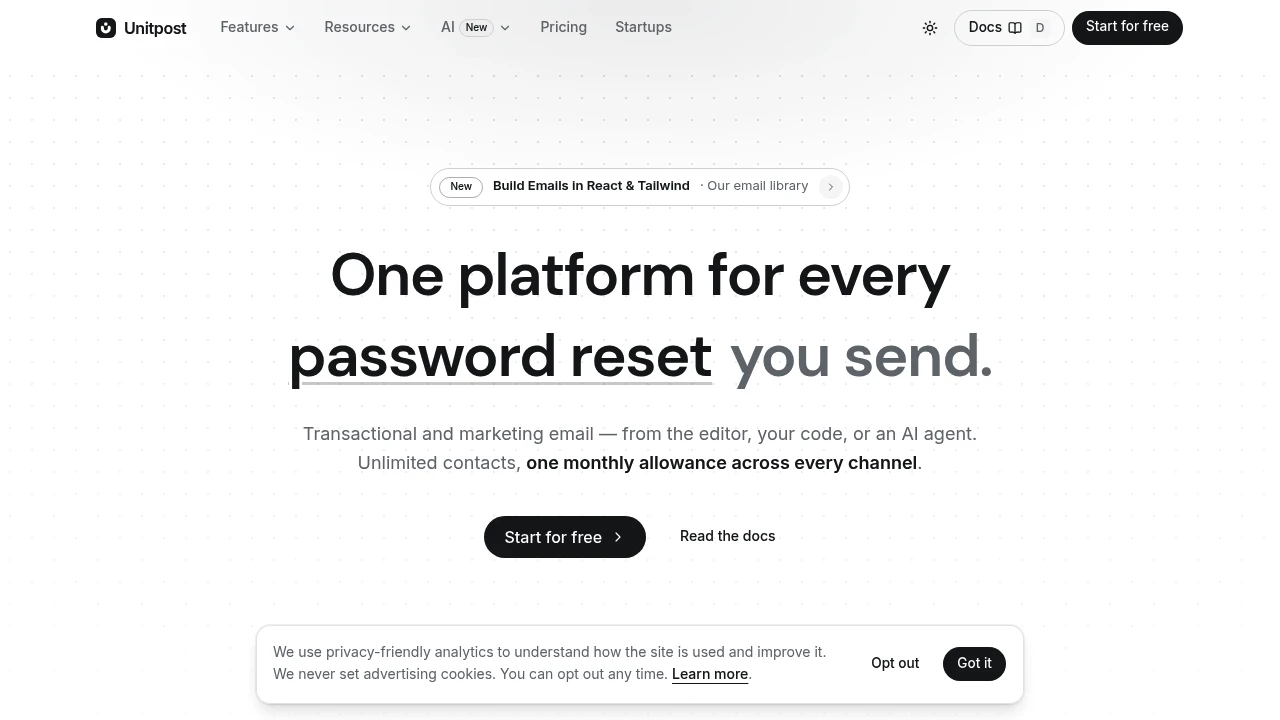
This email platform handles the messages products send every day, from password resets and receipts to newsletters, campaigns, and lifecycle communications. It is designed for teams that want transactional and marketing email in one system, without splitting contacts, templates, and tooling across separate providers.
Teams can work through a REST API, SMTP relay, official SDKs, a visual editor, React components, code templates, or AI agents through MCP. With unlimited contacts and pricing based on email volume rather than list size, it provides a unified infrastructure for products that send many different types of email.
Key Features
Multiple Sending Channels
Send email through the interface that fits your workflow.
- REST API
- SMTP relay
- Official SDKs
- Hosted MCP for AI agents
This gives developers and product teams flexibility in how email is integrated into their applications and workflows.
Visual Email Builder
Create email layouts without building every template from scratch.
The visual editor and template gallery provide a faster way to design transactional and marketing messages, while code-based options are available for teams that want more control.
React Email Components
Build reusable email interfaces with React-based components.
The React option is suited to development teams that prefer working with components and code rather than maintaining every email layout separately.
AI Email Workflows
Connect AI agents through MCP to assist with email creation and sending.
Agents can draft and send emails with scoped access, allowing teams to define what an AI agent is permitted to do while retaining control over email operations.
Unified Contact Management
Keep transactional and marketing audiences in the same system.
The platform includes:
- One contact list
- Custom fields
- Audience segments
- Automatic suppression
Suppression can account for opt-outs, bounces, and complaints, helping prevent messages from being sent to contacts who should no longer receive them.
Deliverability Controls
Manage the technical requirements needed for reliable email delivery.
Domain authentication supports:
- DKIM
- SPF
- DMARC
The platform also includes reputation-oriented protections such as idempotency and rate limits.
Email Event Tracking
Track what happens after messages are sent.
Available events include:
- Delivery
- Opens
- Clicks
Signed webhooks can deliver event information back to your application, while inbound mail handling supports workflows that need to receive email as well as send it.
Built For Product Teams
The platform is designed for products that need both transactional and marketing communication from the same infrastructure.
It is particularly useful for:
- SaaS products managing onboarding and lifecycle messages
- E-commerce teams sending receipts and abandoned cart emails
- Developers integrating email through APIs and SDKs
- Marketing teams running newsletters and campaigns
- Product teams managing transactional and engagement email together
- AI-enabled teams giving agents controlled access to email workflows
Common Use Cases
Transactional Email
Send essential product messages such as:
- Password resets
- Receipts
- Invoices
- Shipping updates
- Account notifications
Lifecycle Messaging
Build onboarding sequences, recurring digests, and other messages tied to the customer journey.
Marketing Campaigns
Manage newsletters, announcements, promotional campaigns, and other marketing communications alongside transactional email.
Abandoned Cart Emails
Use the same platform for commerce-focused lifecycle messages and other product communication.
Developer-Controlled Email
Use APIs, SMTP, SDKs, React components, and code templates depending on how your product team prefers to build.
AI-Assisted Email
Give AI agents scoped access through MCP so they can help draft and send messages without giving them unrestricted control.
One Email System for Transactional and Marketing
Instead of maintaining separate contacts and infrastructure for product email and marketing campaigns, the platform brings both into one system.
Unlimited contacts are included, so pricing is based on email sends rather than the size of your contact list. This makes the model suitable for products with large audiences that may not send to every contact regularly.
Flexible Email Creation
Teams can choose between visual and code-based workflows depending on the type of email being built.
The visual editor and template gallery help teams move quickly, while React components and code templates support reusable, developer-controlled designs. This gives both marketers and engineers a way to work within the same email infrastructure.
Migration Support
Teams switching from another email provider can preview the migration before committing to a full cutover.
This provides an opportunity to evaluate the move first and reduce the risk associated with migrating an existing email setup.
Why It Matters
Modern products often need to send many different types of email, but those messages do not always need separate infrastructure. Password resets, receipts, onboarding messages, newsletters, announcements, and lifecycle campaigns can all depend on the same customer relationships and delivery systems.
By combining sending APIs, audience management, design tools, deliverability controls, event tracking, and AI agent access, this platform gives product and marketing teams one place to manage those communications.
Bring Product and Marketing Email Together
Send transactional messages, build marketing campaigns, manage contacts, track delivery, and give developers or AI agents controlled access through one unified email platform.


